Best Checking Accounts With No Monthly Fees in 2026
I discovered this the hard way. Last year, I glanced at my checking account statement and noticed something I'd been ignoring for months: my bank charged me $12 every month just for keeping the account open. Over a full year, that was $144. Then there were the overdraft fees—once, when a payment posted a day early, I was charged $35 for dipping $8 below zero. Add in five out-of-network ATM visits at $3 each, and suddenly I'd paid my bank nearly $200 just to have a place to store my own money.
This isn't unusual. The average American bank customer pays roughly $120 to $150 yearly in checking account fees, according to banking surveys. When you zoom out, that's $1,200 to $1,500 over a decade on charges that serve no purpose except to pad the bank's revenue. The frustrating part? Most people never calculate the total. The fees feel small in isolation—a few dollars here, $12 there—until you see the yearly bill.
That's why finding a truly no-fee checking account isn't a nice-to-have; it's one of the simplest financial wins available. The money you save doesn't just vanish—it compounds. Put $150 yearly into a high-yield savings account earning even 4% APY, and after a decade you've got $1,750. That's not a fortune, but it's real money, earned by simply switching banks.
What Makes a Checking Account Truly Fee-Free
Here's the trap: not all "no-fee" accounts are created equal. Some charge you zero monthly dollars but then hit you with $35 overdraft fees, $2.50 per ATM withdrawal, or $15 for a wire transfer. Others advertise free checking but require a $5,000 minimum balance—if you drop below that, boom, $25 fee. Before you sign up, you need to know what "free" actually means for that specific bank.
A genuinely fee-free account should have:
- No monthly maintenance fee – zero dollars charged just for having the account open, with no strings attached.
- No overdraft fees – either the bank declines the transaction (it bounces), or it covers the overage without charging you $35+.
- No ATM fees – either the bank reimburses out-of-network fees, or it has a large network of free ATMs (at least 30,000+ nationwide).
- No minimum balance trap – you can keep $5 in the account if you want, and the account stays free.
- No surprise charges – wire transfers, mobile check deposits, and bill pay are all free.
Some accounts ask for a small tradeoff: direct deposit of your paycheck, or a certain number of debit card swipes per month. That's usually fine—you're probably going to use your debit card anyway. But if a bank requires a $2,000 minimum balance or insists on a $500 monthly direct deposit just to waive its $12 fee, walk away. The real no-fee accounts don't have catch-22 requirements.
Best Free Checking Accounts for Different Needs
No single account works for everyone. Your banking habits matter. Are you someone who needs cash constantly? Do you travel? Are you a side hustler managing multiple income streams? Let me walk through the real scenarios.
For Everyday Banking (Most People)
If you have a stable job, get direct deposited paychecks, and mostly swipe your debit card or pay bills online, an online bank checking account is hard to beat. These accounts are completely free—no minimums, no monthly fees, no gotchas. You can open one in five minutes from your phone. The trade-off is you don't have a physical branch to walk into, but honestly, when was the last time you actually needed one? You can deposit checks by snapping a photo with your phone, and most bills are paid online anyway.
A concrete example: I switched to an online bank's free checking account in January 2025. Zero monthly fee. No minimum balance. Their ATM network includes 30,000+ partner machines nationwide. I deposit my paycheck via direct deposit (free), pay my rent through bill pay (free), and if I need cash, I hit a Walgreens or Target ATM (free). Over the year, I'm saving that $144 in monthly fees, plus another $60 I used to spend on out-of-network ATM charges. $204 yearly, just for switching.
For Frequent Travelers
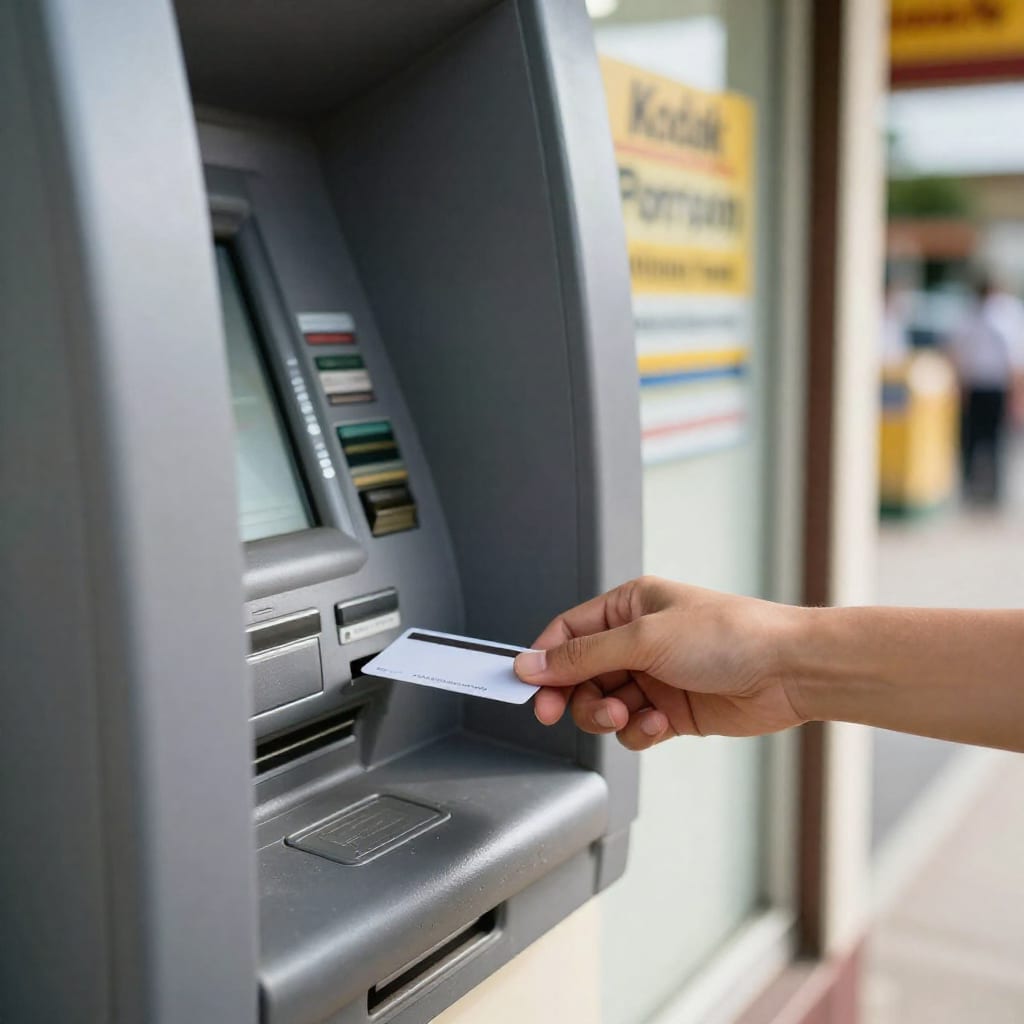
If you take regular trips and often find yourself in places where your bank's ATM network doesn't exist, you need an account that reimburses out-of-network ATM fees. Some banks refund up to $15 per month in ATM fees, which adds up if you're pulling cash in different cities. Additionally, if you travel internationally, you want a bank that doesn't charge foreign transaction fees on debit card purchases. These accounts are usually free too—no catch beyond the travel-friendly positioning.
For Side Hustlers and Freelancers
If you're managing a side gig and receive transfers from clients or payment apps, you need a checking account that handles transfers quickly and doesn't charge you to receive money. Some businesses prefer to wire payments directly to your checking account instead of a savings account. A free checking account that processes transfers instantly (or within one business day) is worth its weight in gold for cash flow. No fees, fast posting, straightforward.
Online Banks vs. Traditional Banks: Where Fees Hide
Here's the uncomfortable truth that traditional banks won't tell you: they rely on customers not switching. They know that most people find changing banks to be a hassle, so they can charge $12 a month, knowing only a fraction will leave. Online banks—fintech startups and direct banks without branch networks—entered the market specifically to undercut this model by offering free checking as their main selling point. They make money on loans and investments, not on nickel-and-diming customers.
A big-name traditional bank might advertise "no monthly fees" but then define it narrowly: "No monthly maintenance fee if you maintain a $2,500 minimum balance OR set up a direct deposit of at least $500." Drop below $2,500 for one day? $12 fee. Got laid off and paused your direct deposits? $12 fee. That's a bait-and-switch, dressed up as "free."
Online banks cut through this with straightforward language: "Free checking. No minimums. No monthly fees. Period." They can afford to do this because they don't maintain expensive branch networks. No brick-and-mortar real estate, no tellers, no vault—just software and call centers. The savings get passed to you as actual free checking.

That said, not all online banks are equal, and some traditional banks have genuinely free offerings too. The key is to read the fine print. If it requires anything to stay free—a minimum, a regular deposit, a debit card swipe quota—it's not truly free. Real free checking has no conditions.
How to Earn While You Bank: Rewards and Interest
Here's where free checking gets even better: some accounts now pay you. Not much, but something. Online banks are starting to offer interest on checking balances—typically 0.01% to 0.50% APY, depending on the bank and your balance. If you keep $10,000 in a checking account earning 0.40% APY, that's $40 yearly in interest. Combine that with $144 saved in monthly fees, and you've moved from break-even to +$184 yearly, just by banking differently.
Some credit unions and online banks also offer cashback rewards on debit card purchases—usually 0.5% to 1% on everyday spending. This is rarer for checking than for credit cards, but when available, it's a real perk. Over a year of $5,000 in debit card spending, 1% cashback is $50 back in your account.
The key: these rewards are a bonus, not the main reason to switch. The main reason is eliminating fees. If you find a genuinely free checking account that also pays interest or cashback, that's a win—but don't switch to a sketchy account just because it promises 1% rewards. Stability and ease of use matter more.
Hidden Fees That Sneak Past Most Customers
Even no-fee checking accounts can surprise you if you're not careful. Here are the gotchas I've seen people miss:
- Wire transfer fees: Sending a wire domestically might cost $15–$30. For someone who rarely wires money, this is fine; for a small business owner or freelancer, it matters.
- Foreign transaction fees: Swipe your debit card abroad and some banks charge 1–3% of the transaction. Online banks are more likely to waive this, but verify before you travel.
- Account closure penalties: A few banks charge $25–$50 if you close the account within the first few months. Read the terms.
- Paper statement fees: If you ask for printed statements instead of e-statements, some banks charge $1–$2 per month. This is outdated and rare, but check.
- Dormancy fees: If you don't use the account for 12+ months, some banks charge an inactivity fee. This is uncommon with real no-fee banks but happens at smaller credit unions.
The fix: before opening an account, download the fee schedule PDF from the bank's website. Look specifically for words like "overdraft," "wire," "ATM," "minimum," and "maintenance." If the PDF lists a bunch of fees but claims the account is free, it's not free—it's fee-lite.
Getting Started: Your Next Steps
Switching banks is easier now than it ever has been. Most free checking accounts let you open an account entirely online, and many will let you upload a photo of a check to deposit funds while you wait for your first paycheck to be direct-deposited. Here's how to make the move:
- Pick a bank or credit union from the options above based on your specific needs (ATM access, interest rates, travel-friendliness).
- Open the account online—takes 10 minutes.
- Set up direct deposit with your employer (free, takes one pay cycle).
- Use your new debit card for everyday spending.
- Keep your old account open for 30 days while transactions clear, then close it.
The entire process takes a month and costs you nothing. But the payoff—$120 to $200 yearly in fees you'll never pay—compounds over a lifetime. If you keep that savings account funded and earning interest, you're not just avoiding fees; you're building wealth on what used to be money thrown away.
The dirty truth is that traditional banks built their business model on customers not switching. But switching is simple now, and the rewards are real. Don't leave money on the table just because inertia is comfortable. Your future self will thank you.